

How to Improve Loading Dock Safety: 5 Key Areas to Address
Loading docks are among the busiest and riskiest areas of any warehouse or distribution center. With a constant flow of people, forklifts, and freight, it’s no surprise that these zones are frequent sites for accidents involving falls, impacts, and equipment damage. Fortunately, with the right planning and protection in place, many of these incidents are entirely preventable.
This guide outlines the most common hazard zones around the loading dock and how to proactively reinforce them using practical, code-compliant safety products.
1. Protecting Dock Edges
Falls from elevated surfaces remain one of OSHA’s most frequently cited violations, and loading docks are no exception. Whether it’s a pedestrian misstep or a forklift backing up too far, an unprotected dock edge presents a serious fall hazard.
Recommended Solutions:
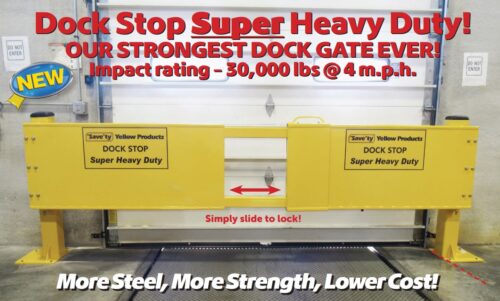
Dock Stop Super HD: With a 30,000 lb impact rating at 4 mph and simple user operation, this is the strongest solution for protecting against forklift roll-offs.
Lift Gate: Ideal for locations with limited clearance. Its vertical lift design provides OSHA-compliant fall protection while saving space.
Rotating Dock Gate: A swing-style gate that clearly defines the edge while maintaining ease of use. Excellent for high-traffic areas.
All of these gates meet OSHA fall protection requirements and are built to endure the rigors of daily dock activity.
2. Blocking Unauthorized Entry and Debris
Docks and drive-up doors that stay open throughout the day can become unintended access points for birds, insects, dust, and even unauthorized personnel. This creates both cleanliness and security issues.
Recommended Solution:
Fabric Dock Gate: This breathable, high-visibility gate blocks intrusion while allowing airflow; perfect for open-air docks. Its lightweight fabric design has a tear-rating of 300 lbs at 4 mph, but only requires 3 lbs of pull force to operate and is easy to install.
3. Reinforcing Overhead Door Tracks
A surprising number of service calls stem from bent or broken door track, often caused by pallets or forklifts making contact during staging, loading, and unloading.
Recommended Solution:
Door Track Protectors: These guards eliminate the need for costly repairs by shielding overhead door tracks from impact. Available with or without bevels and baseplates.
4. Protecting Pedestrian Pathways
In-plant offices, dock-side logistics workstations, and maintenance rooms are often tucked just off the main travel paths. When pedestrians and forklifts share tight dock corridors, the risk of impact injury increases.
Recommended Solution:
Bollards: Simple but highly effective, bollards provide visible and physical protection around doorways, walkways, and building corners. They can also be used to delineate pedestrian lanes.
5. Planning for Safe Dock Traffic Flow
Preventing collisions and falls isn’t just about placing products; it’s about smart layout planning. Think through the flow of people, forklifts, and product to identify blind spots, tight turns, and shared-use zones.
Tips:
• Use hand gates or barriers, such as guardrail or handrail, to clearly mark open edges and direct traffic.
• Ensure that staging areas do not block walkways or exits.
• Consider Collision Awareness’ dock products for enhanced visual safety and traffic warnings.
Conclusion: Safer Docks, Smarter Facilities
A well-protected dock isn’t just safer: it’s more efficient, more compliant, and more resilient. By reinforcing key areas like dock edges, overhead doors, and walkways, you reduce the likelihood of costly accidents by improving your loading dock safety and maintaining compliance with OSHA standards.