Skip to Content
Exit

Author Archives: Bryan Hohlfelder

  1. Prevent the Fall: 3 Ways to Improve Mezzanine Safety and Fall Protection

    Comments Off on Prevent the Fall: 3 Ways to Improve Mezzanine Safety and Fall Protection

    Mezzanines are an essential way to expand vertical storage and workspace in warehouses and industrial facilities. But when it comes to safety, elevated platforms can be a major blind spot. Without proper edge protection, fall prevention systems, and access control, a single misstep can lead to serious injury or even death.

    According to OSHA standard 1910.28(b)(1)(i), employers must provide fall protection for employees working at heights of 4 feet or more in general industry settings. Mezzanines almost always fall within this threshold, yet many facilities rely on outdated or incomplete guarding. Here are three proven ways to make your mezzanine safer:


    1. Install Continuous Guardrail Systems

    Guardrail and handrail systems are the backbone of mezzanine fall protection. OSHA requires guardrails to be at least 42″ high with a mid-rail at 21″. Our standard Handrail system meets these requirements, while the Twin Rail design provides added reinforcement and a visual barrier. Both options bolt securely to the mezzanine and are ideal for walkways, platforms, and elevated work areas. Our Twin Rail also has quick-release hardware, creating removable horizontal guards that can create a quick access point when required, without the need for a separate gate.


    1. Use Swing Gates and Mezzanine Gates for Controlled Access

    Mezzanine access points are frequent sources of risk. Without a gate or barrier, workers are exposed to open platform edges. Our new Adjustable Swing Gate offers a simple, economical way to meet OSHA requirements while allowing one-way, self-closing access. With built-in hardware stops and up to 10” of adjustability per gate size, ranging between 19” – 48”, they install easily to existing guardrail or handrail.

    For pallet drop zones, Pivot Gates and PickerPal Gates provide full-time edge protection, even during loading and unloading. These gates protect workers without slowing operations.


    1. Reinforce High-Traffic Areas and Corners

    It’s not just the edge of the mezzanine that needs attention. Corners, access points, and traffic areas benefit from additional visual and physical barriers. Combining bollards or guardrail to create a barrier along with handrail systems can improve navigation and prevent unintentional impacts to important mezzanine structures.


    Built for Safety, Backed by Experience


    Every facility has unique needs. Whether you’re adding a small platform or building a multi-level system, fall protection isn’t optional; it’s required. Save-ty Yellow Products manufactures durable, American-made solutions to meet OSHA standards and protect workers every step of the way.


    Need help planning your mezzanine safety layout? Contact us today to get started.

  2. Are Your Uprights Protected? Why Post Damage Is a Bigger Risk Than You Think

    Comments Off on Are Your Uprights Protected? Why Post Damage Is a Bigger Risk Than You Think

    In the hustle of daily warehouse operations, few things take more of a beating than rack uprights. From wayward forklifts to pallet misalignment, these structural components often absorb repeated impacts over time and unfortunately, the consequences of that damage are too often overlooked. Damaged uprights pose a serious risk not only to rack stability, but also to employee safety, inventory integrity, and overall operational efficiency.

    Why Post Damage Shouldn’t Be Ignored

    While a bent upright may seem minor at first, it can quickly escalate into a major structural hazard. Uprights support the full weight of palletized inventory, and even small distortions can compromise the load-bearing strength of the entire system. According to OSHA’s General Duty Clause (source), employers are required to provide a workplace free from recognized hazards, including unstable storage systems. Rack collapse is one of the most catastrophic risks in warehouse safety, and damaged uprights are a common precursor.

    In addition to the risk of collapse, damaged uprights can:

    • Make rack systems non-compliant with safety codes or vendor contracts
    • Lead to inventory loss from falling or destabilized product
    • Increase repair and replacement costs over time
    • Cause operational downtime during emergency inspections or rework


    Common Impact Zones (and How to Protect Them)

    Some areas of the warehouse are more prone to damage than others. These high-traffic, high-risk zones are where post protection is most critical:

    Rack Upright Faces: The front of pallet rack frames are often struck by forklifts and pallet loads. Post protectors shield these contact points and absorb impact before it reaches the rack structure.

    End of Aisle: These corners see the most cross-traffic and tight turns. End of Aisle Guards are designed to take the brunt of forklift impacts and reduce costly rack repair.

    Back-to-Back Racking: While less exposed to direct impact, these areas can suffer from over-pushed pallets or shifting loads. Installing flue protection products like Beam Pallet Stops and Flue Spacers can help maintain safe spacing and reduce accidental contact with rack frames.

    As an added bonus, they also assist with creating a fire-code compliant setup. You can take a look at our blog here for more information.


    Post Protectors: Not One-Size-Fits-All

    Every facility has different needs depending on its layout, equipment, and storage methods. That’s why Save-ty Yellow offers a range of post protector styles:

    Bolt-Down Post Protectors: Heavy-duty steel guards that anchor directly into the floor. Available in standard or custom heights for maximum coverage.

    Bolt-On Post Protects: Designed to deflect impact away from the rack face, especially in tight aisles, without needing to anchor to the ground.

    Snap-On Protectors: Ideal for light-duty or temporary applications where bolting into the floor isn’t preferred.

    End of Aisle Guards: Full wrap-around protection for rack ends, often combined with flue space compliance tools.

    These solutions help prevent damage before it starts, saving time, money, and stress down the road.


    Proactive Protection Pays Off

    Investing in post protection isn’t just about minimizing damage; it’s about preserving long-term structural integrity, maintaining safety standards, and avoiding unexpected downtime. Facilities that proactively reinforce their uprights experience fewer disruptions, safer work environments, and smoother operations.

    Whether you’re outfitting a new warehouse or upgrading your current setup, remember: upright protection is foundational to rack safety. Because once the damage is done, the cost is almost always higher than the fix would have been.


    Need Help Choosing the Right Protection? Our team is here to help you find the right post protection products for your facility. Contact us today to learn more or request a layout review.

  3. How to Improve Loading Dock Safety: 5 Key Areas to Address

    Comments Off on How to Improve Loading Dock Safety: 5 Key Areas to Address

    How to Improve Loading Dock Safety: 5 Key Areas to Address

    Loading docks are among the busiest and riskiest areas of any warehouse or distribution center. With a constant flow of people, forklifts, and freight, it’s no surprise that these zones are frequent sites for accidents involving falls, impacts, and equipment damage. Fortunately, with the right planning and protection in place, many of these incidents are entirely preventable.

    This guide outlines the most common hazard zones around the loading dock and how to proactively reinforce them using practical, code-compliant safety products.


    1. Protecting Dock Edges

    Falls from elevated surfaces remain one of OSHA’s most frequently cited violations, and loading docks are no exception. Whether it’s a pedestrian misstep or a forklift backing up too far, an unprotected dock edge presents a serious fall hazard.

    Recommended Solutions:

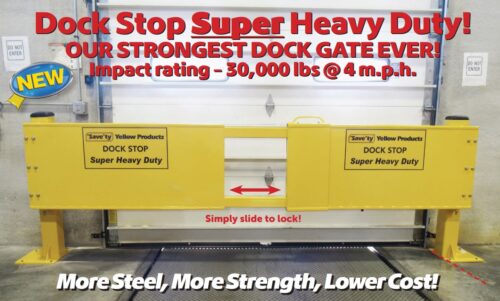
    Dock Stop Super HD: With a 30,000 lb impact rating at 4 mph and simple user operation, this is the strongest solution for protecting against forklift roll-offs.

    Lift Gate: Ideal for locations with limited clearance. Its vertical lift design provides OSHA-compliant fall protection while saving space.

    Rotating Dock Gate: A swing-style gate that clearly defines the edge while maintaining ease of use. Excellent for high-traffic areas.

    All of these gates meet OSHA fall protection requirements and are built to endure the rigors of daily dock activity.

    Improve Dock Safety


    2. Blocking Unauthorized Entry and Debris

    Docks and drive-up doors that stay open throughout the day can become unintended access points for birds, insects, dust, and even unauthorized personnel. This creates both cleanliness and security issues.

    Recommended Solution:

    Fabric Dock Gate: This breathable, high-visibility gate blocks intrusion while allowing airflow; perfect for open-air docks. Its lightweight fabric design has a tear-rating of 300 lbs at 4 mph, but only requires 3 lbs of pull force to operate and is easy to install.


    3. Reinforcing Overhead Door Tracks

    A surprising number of service calls stem from bent or broken door track, often caused by pallets or forklifts making contact during staging, loading, and unloading.

    Recommended Solution:

    Door Track Protectors: These guards eliminate the need for costly repairs by shielding overhead door tracks from impact. Available with or without bevels and baseplates.


    4. Protecting Pedestrian Pathways

    In-plant offices, dock-side logistics workstations, and maintenance rooms are often tucked just off the main travel paths. When pedestrians and forklifts share tight dock corridors, the risk of impact injury increases.

    Recommended Solution:

    Bollards: Simple but highly effective, bollards provide visible and physical protection around doorways, walkways, and building corners. They can also be used to delineate pedestrian lanes.


    5. Planning for Safe Dock Traffic Flow

    Preventing collisions and falls isn’t just about placing products; it’s about smart layout planning. Think through the flow of people, forklifts, and product to identify blind spots, tight turns, and shared-use zones.

    Tips:

    • Use hand gates or barriers, such as guardrail or handrail, to clearly mark open edges and direct traffic.
    • Ensure that staging areas do not block walkways or exits.
    • Consider Collision Awareness’ dock products for enhanced visual safety and traffic warnings.

    Conclusion: Safer Docks, Smarter Facilities

    A well-protected dock isn’t just safer: it’s more efficient, more compliant, and more resilient. By reinforcing key areas like dock edges, overhead doors, and walkways, you reduce the likelihood of costly accidents by improving your loading dock safety and maintaining compliance with OSHA standards.

    If you’re not sure which solutions are right for your facility, we’re here to help. From product recommendations to on-site layout planning, Savety Yellow Products makes safety simple.

    Contact us today for more information or to set up an on-site walkthrough with one of our representatives.

  4. The Hidden Costs of Forklift Impacts and How to Prevent Them

    Comments Off on The Hidden Costs of Forklift Impacts and How to Prevent Them

    The Hidden Costs of Forklift Impacts and How to Prevent Them

    Warehouses and distribution centers depend on forklifts to keep operations moving. But when it comes to safety and infrastructure, the same equipment that powers productivity can also cause serious damage. Forklift impacts are among the most common safety risks in material handling environments, and their true cost goes far beyond bent rack or dented steel.

    Forklift impact prevention is more than just a safety measure. It’s a cost-saving strategy that protects your people, infrastructure, and bottom line.

    The Real Cost of a Forklift Impacts and Collision

    At a glance, a minor impact may seem like no big deal. But even low-speed collisions can carry significant consequences:

    (1) Rack damage that compromises structural integrity and requires costly inspection or replacement
    (2) Inventory loss due to falling pallets or damaged goods
    (3) Downtime while equipment is repaired or areas are blocked off
    (4) Injury liability when workers are nearby
    (5) Facility repairs to columns, doors, or dock equipment
    (6) Increased insurance rates or, in some cases, difficulty obtaining coverage after a claim
    (7) Risk management concerns that can affect safety audits and vendor relationships

    According to OSHA, employers are responsible for maintaining safe working conditions under the General Duty Clause (Section 5(a)(1)) of the Occupational Safety and Health Act. While OSHA doesn’t mandate specific guarding products, it has cited companies for failing to provide adequate protection where known hazards like forklift traffic exist.

    In addition, OSHA 1910.176 states that material handling equipment must be stored in a manner that does not create a hazard, and passageways must be kept clear and safe. Forklift collisions often violate these standards when they damage storage systems or obstruct egress paths.

    Forklift impact prevention also plays a key role in managing risk, as reducing incidents can help avoid costly insurance hikes and liability claims.

    High-Risk Forklift Impact Zones to Watch

    While every facility layout is different, certain areas consistently carry higher risk for impact:

    • End of Aisles: Where turns are tight and visibility is reduced
    • Rack Uprights: Especially at intersections and transfer aisles
    • Building Columns: Often positioned near high-traffic zones
    • Dock Doors: Where forklifts frequently enter and exit with limited clearance
    • Pedestrian Paths: Crossovers and shared spaces with foot traffic
    • In-Plant Offices & Traffic Patterns in Front of Them: Frequent forklift traffic near offices poses collision risks
    • Washrooms, Lunch Rooms, and Maintenance Offices: High foot traffic zones that need clear separation from equipment movement

    Preventing damage in these zones reduces risk while protecting long-term productivity and helping maintain a positive insurance and risk management standing.


    How to Prevent Forklift Impacts and Damage with Physical Barriers

    The most reliable way to reduce forklift-related damage is through properly installed, impact-rated barriers. These products form the backbone of any forklift impact prevention plan, delivering both physical barriers and visual cues to keep operators on track. Moreover, these systems act as passive protection, reducing reliance on perfect driving or constant supervision. Common solutions include:

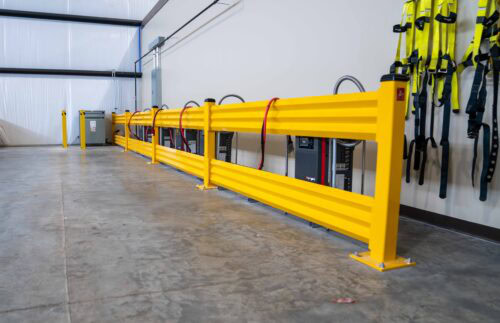
    Guardrail Systems: Designed to absorb and redirect forklift impact away from vulnerable infrastructure and personnel. Savety Yellow’s Stand Guard systems are available in standard, lite-duty, and heavy-duty versions depending on equipment size and speed.

    Post Protectors: Installed directly onto rack uprights or in front of them, these protect against low-level strikes that could compromise racking.

    End of Aisle Protection: Reinforces the most exposed parts of rack systems with welded, curved barriers.

    Dock Gates and Door Track Protectors: Prevent forklifts from rolling off open docks and damaging overhead door equipment.

    Bollards: Provide general facility protection, shielding building corners, walkways, equipment, and more from incidental forklift impact.

    All protective equipment should be selected based on application, speed, and exposure level. For example, facilities with high-speed forklift traffic or heavier lift equipment may require more robust guardrails or heavy duty posts with larger baseplates. In contrast, lighter-duty environments may benefit from slim-profile solutions that still maintain compliance without taking up excessive space. It’s also important to assess how frequently an area is accessed, whether it’s shared with pedestrians, and what kind of assets need protection, all of which inform the right product choice.


    Conclusion: A Small Impact Can Have a Big Price Tag

    Forklift impacts are often underestimated, but their effects ripple throughout a facility’s operations. From OSHA liability to repair costs and unplanned downtime, the long-term consequences are real.

    By investing in forklift impact prevention, facilities can reduce downtime, lower insurance risk, and protect both people and infrastructure.

    Not sure what products are right for your application? We’re here to help. Our phone lines are open, and we also offer on-site impact assessments upon request. Contact us today!

    Forklift Impact Prevention

  5. Understanding Flue Spaces: A Critical Factor in Warehouse Fire Safety

    Comments Off on Understanding Flue Spaces: A Critical Factor in Warehouse Fire Safety

    In warehouse storage design, flue spaces are one of the most overlooked elements of fire protection. Yet, maintaining clear flue spaces can significantly affect how a fire behaves and how quickly it can be contained. For warehouse operators and safety professionals, understanding and managing flue spaces is a key part of maintaining a fire-safe environment.


    What Are Flue Spaces?

    Flue spaces are the vertical and horizontal gaps between rows of palletized goods in racking systems. These spaces provide pathways for heat and smoke to rise and for fire suppression systems, particularly sprinkler systems, to effectively reach the base of a fire. There are two primary types:

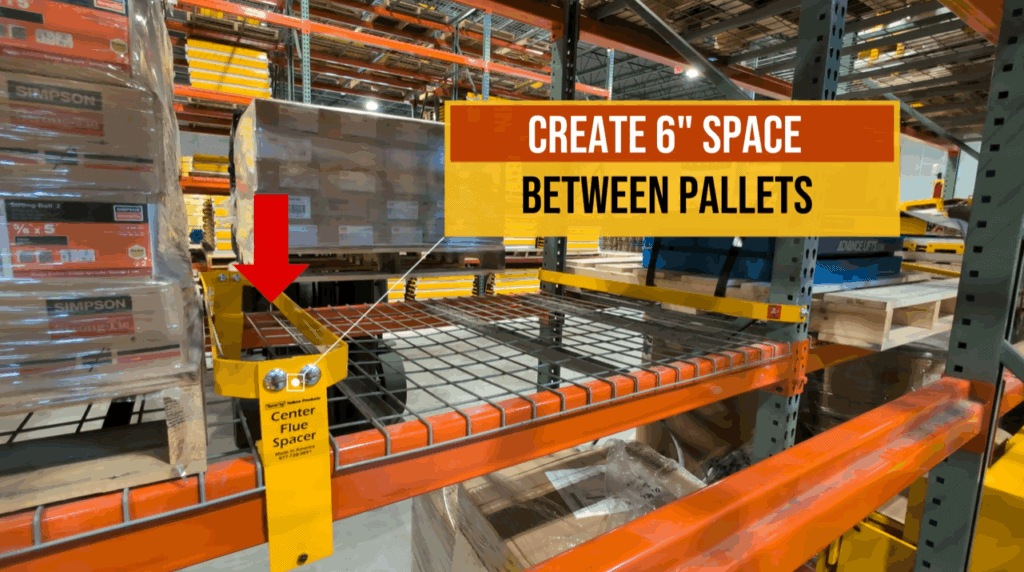
    Transverse Flue Spaces: The space between back-to-back racks, typically 6 inches.

    Longitudinal Flue Spaces: The space between loads and the upright frame, typically 3 inches from each side of racking and 6 inches between loads.

    When these spaces are blocked, it becomes much harder for sprinklers to do their job, and the spread of fire can become far more severe.


    Why Are Flue Spaces Important?

    In the event of a fire, flue spaces function like vertical chimneys, allowing heat and smoke to rise. This upward airflow helps activate ceiling-level sprinklers faster and ensures that water reaches deeper into the racking system. Without these spaces, fire suppression is delayed, and the risk of extensive damage or injury increases.

    Blocked flue spaces can also hinder firefighter access and visibility, compounding the hazard. Even the most well-designed sprinkler systems rely on unobstructed flue space to perform as intended.


    What Do Fire Codes Say?

    The National Fire Protection Association (NFPA) outlines specific requirements for flue spaces in NFPA 13, which is the Standard for the Installation of Sprinkler Systems. According to the standard:

    Transverse flue spaces should be a minimum of 6 inches wide.

    Longitudinal flue spaces (along the load face) should be at least 3 inches.

    These guidelines are enforced by local fire marshals and building inspectors, and compliance is often required as part of facility inspections. Failure to maintain clear flue spaces can lead to citations, required corrective actions, or increased liability in the event of an incident.


    OSHA and General Safety Compliance

    While OSHA doesn’t specifically regulate flue spaces in its standards, the agency can cite facilities under the General Duty Clause (Section 5(a)(1), if storage practices are deemed hazardous. This includes scenarios where poor racking arrangements or blocked flue spaces contribute to elevated fire risk.

    Warehouse safety is a system, and fire prevention is a shared responsibility between storage design, employee behavior, and code-compliant equipment.


    Maintaining Flue Spaces in Real-World Warehouses

    In theory, it’s easy to maintain proper spacing between pallets and rack uprights. In reality, the fast pace of warehouse operations, personnel changes, and variations in load size can all contribute to inconsistent pallet placement. Relying solely on training and signage often leads to uneven results.

    4 Ways to Improve Fire Code Compliance

    Many warehouses can improve consistency by incorporating physical spacing tools that passively enforce compliance and reduce reliance on manual precision. These include:

    Center Flue Spacers: Installed between back-to-back racks, these maintain the required 6″ transverse flue space by physically separating rack systems. They help ensure compliance with fire code even when pallets are loaded tightly.

    Flue Spacers: Positioned along the uprights, these reinforce longitudinal flue space (typically 3″) by guiding pallet placement. They help prevent storage from encroaching into required vertical gaps, especially in high-turnover environments.

    Beam Pallet Stops: Installed on rack beams, these stops prevent pallets from being pushed too deep into the racking, protecting the flue space between racking and against the wall. They offer a repeatable stopping point to promote consistent loading practices.

    Floor Pallet Stops: Anchored directly to the floor, these stops help preserve flue space and prevent damage to perimeter walls. They’re ideal for use in back-to-back rack situations and along walls where spacing and protection are both needed.


    Conclusion: Small Gaps, Big Impact

    Flue spaces might seem like minor details in a complex warehouse environment, but they play a crucial role in protecting people, inventory, and infrastructure from fire-related damage. Whether you manage a single facility or oversee safety across multiple sites, taking the time to understand and enforce proper flue spacing is a critical step in maintaining compliance and reducing risk.

    Flue Space

    Click to watch our flue spacer protection products in action!

  6. 3 Critical Guardrail Problems (And How the Drop-In, Lift-Out Design Solves Them)

    Comments Off on 3 Critical Guardrail Problems (And How the Drop-In, Lift-Out Design Solves Them)

    The Drop-In, Lift-Out Guardrail Advantage: How a Simple Design Change Reduces Cost and Downtime

    When most facility managers think about warehouse safety, they immediately focus on protecting their people, equipment, and inventory. Guardrails are often one of the first lines of defense in that protection plan. However, not all guardrail systems are created equal. In fact, one small design detail can have a big impact on your facility’s long-term costs, downtime, and flexibility: the drop-in, lift-out welded sleeve.


    3 Critical Problems with Traditional Guardrail Systems

    Many traditional guardrail systems rely on brackets, multiple hardware components, and labor-intensive installation processes. Each post may require separate mounting brackets, individual hardware kits, and careful assembly to ensure proper alignment. Over time, this can create several challenges:
    1) Higher installation costs: More parts and longer labor hours drive up initial expenses.
    2) Difficult modifications: Changing layouts or reconfiguring guardrails requires significant time and disruption.
    3) Time-consuming repairs: Damaged rails often mean disassembling large sections, prolonging downtime and increasing labor costs.

    What seems like a small detail during installation quickly turns into ongoing headaches as your facility evolves.


    The Innovation Behind the Drop-In, Lift-Out Sleeve Design

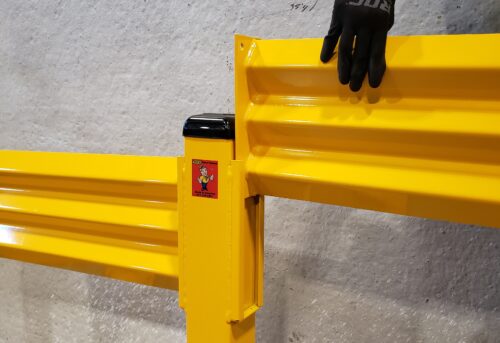
    At Savety Yellow Products, we recognized the need for a better solution. Our original Drop-In, Lift-Out sleeve design simplifies guardrail installation and maintenance by fully welding the sleeves directly to the posts. This seemingly small change delivers significant advantages:

    • Simplified installation: Fewer brackets and hardware reduce labor time and minimize the chance for installation errors.
    • Easy modifications: Rails can be lifted out quickly to allow for layout changes or temporary access.
    • Faster repairs: Damaged rails can be replaced without disassembling the entire system, keeping your operations running smoothly.

    This design prioritizes both strength and serviceability, ensuring your guardrail system continues to deliver protection without unnecessary complexity.


    The Long-Term Savings Add Up

    While some facilities may initially focus on upfront costs, it’s the long-term savings where our Drop-In, Lift-Out design truly shines:

    • Lower initial labor costs during installation.
    • Reduced downtime when making modifications or repairs.
    • Flexibility to adapt to changing facility layouts without major disruptions.
    • Less inventory required for spare parts and hardware.

    Over the lifespan of your facility, these savings can add up to thousands of dollars while keeping your operation running efficiently and safely.


    A Small Detail That Makes a Big Difference

    When it comes to facility protection, thoughtful engineering matters. The Original Drop-In, Lift-Out design reflects Savety Yellow Products’ commitment to creating practical, American-made solutions that prioritize both safety and operational efficiency.

    If you’re considering guardrail solutions for your facility, contact us today to learn how the Drop-In, Lift-Out design can help protect your people, products, and equipment while saving you time and money.